
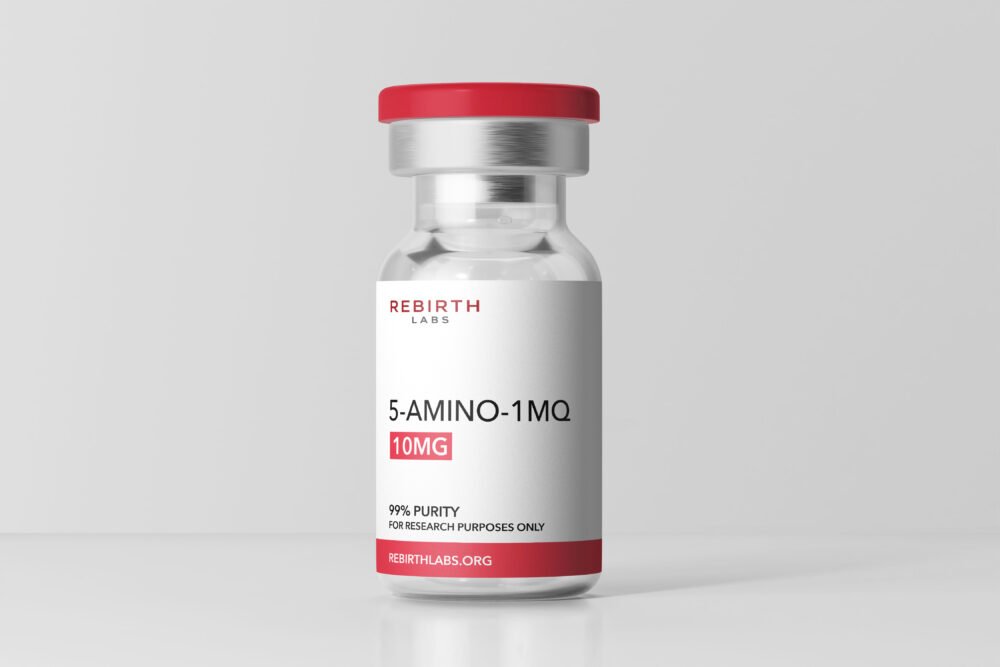
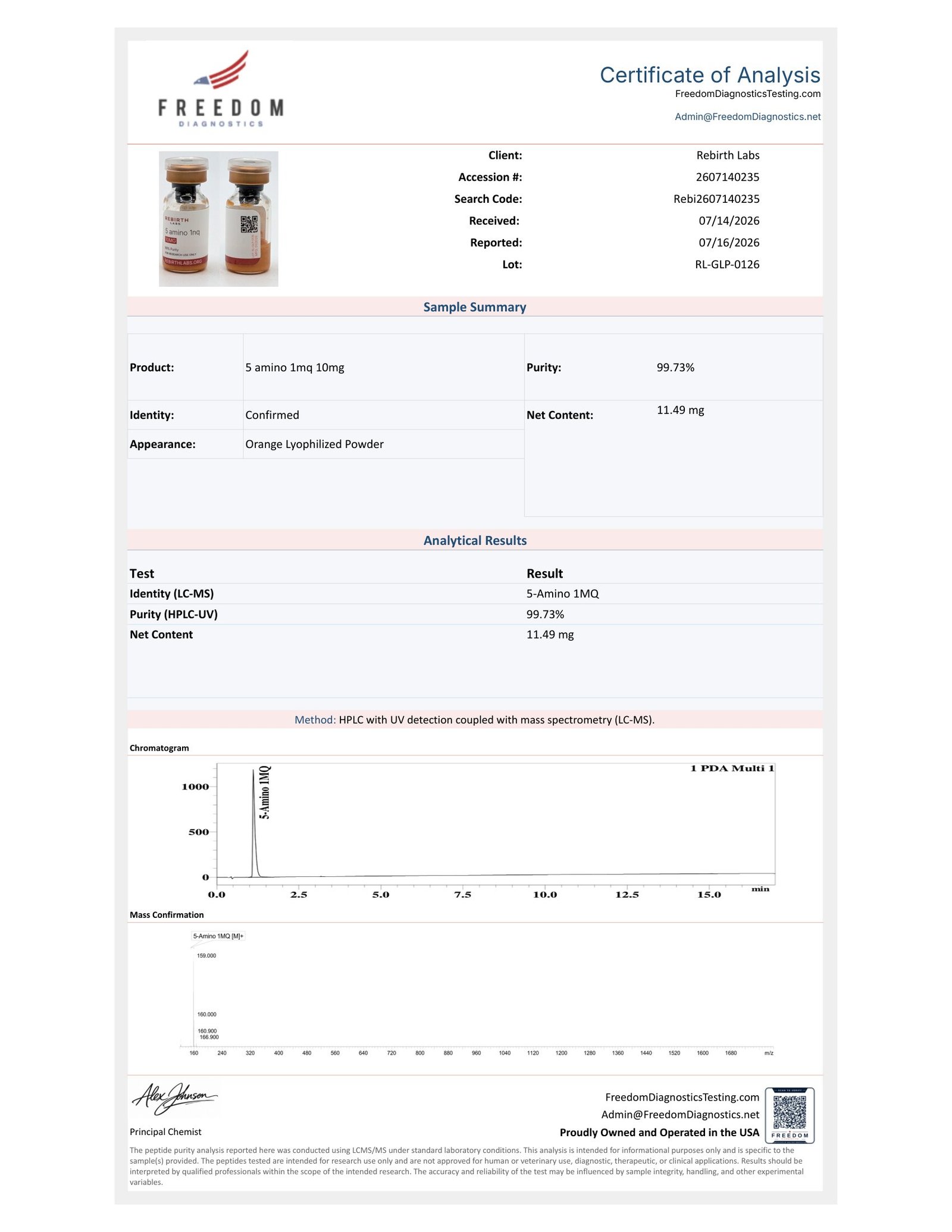
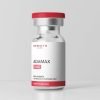
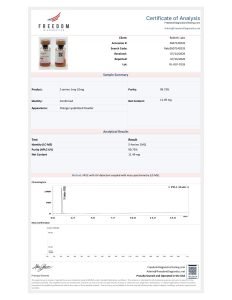
5-Amino-1MQ
5-Amino-1-Methylquinolinium (5-Amino-1MQ) is a small-molecule, cell-permeable selective inhibitor of nicotinamide N-methyltransferase (NNMT). In preclinical models it has been investigated for its ability to raise intracellular NAD+ and SAM pools, restrict adipocyte lipogenesis, and modulate sirtuin-dependent metabolic signaling in white adipose tissue and skeletal muscle.
Mechanism of Action: How It Works
The primary therapeutic thesis behind 5-Amino-1MQ revolves around cellular metabolism, specifically targeting a metabolic “handbrake” enzyme:
Inhibiting NNMT: NNMT is an enzyme that is highly upregulated in white adipose tissue (fat cells) during obesity and metabolic dysfunction. When NNMT levels are high, it burns through critical molecular resources, locking fat cells into a “storage” state and making weight loss incredibly difficult.
Boosting NAD+ Levels: NNMT degrades nicotinamide, pulling it away from the NAD+ salvage pathway. By blocking NNMT, 5-Amino-1MQ keeps more nicotinamide available, which animal and cell models show increases intracellular NAD+ pools by 1.2 to 1.6 fold, enhancing mitochondrial energy output.
Preserving SAM (S-Adenosylmethionine): NNMT relies on SAM as a methyl donor. Inhibiting the enzyme stops the heavy drain on SAM, shifting the methylation cycle in adipose tissue toward genes that promote active fat oxidation (fat burning) rather than fat storage.
What Preclinical Research Shows
As of 2026, the scientific backing for 5-Amino-1MQ is entirely preclinical (conducted in cell cultures and rodent models). [1, 2]
The landmark mouse studies demonstrate the following effects when obese mice were treated with the compound: [1]
Adipose Reduction: A profound reduction in white adipose tissue (fat mass) and a shrinking of overall fat cell size. [1]
Weight Loss Without Appetite Changes: In diet-induced obese mice, the compound reversed obesity (causing roughly a 7% drop in body weight in 11 days) without changing food intake. This indicates a direct upregulation of energy expenditure rather than appetite suppression.
Metabolic Improvements: Lowered cholesterol levels, reduced lipogenesis (the creation of new fat), and improved glucose tolerance and insulin sensitivity.
| Dosage | 10mg, 50mg |
|---|
Be the first to review “5-AMINO-1MQ”
Related products
Uncategorized
Uncategorized
Uncategorized
Uncategorized
Uncategorized
Uncategorized
Uncategorized
Uncategorized
Reviews
There are no reviews yet.